AUREA / THE BUYING GUIDE
Choose your espresso machine.
A machine, a grinder and your way of serving. Practical pointers for putting the right equipment together.
01 / START WITH DAILY USE
Your service sets the direction.
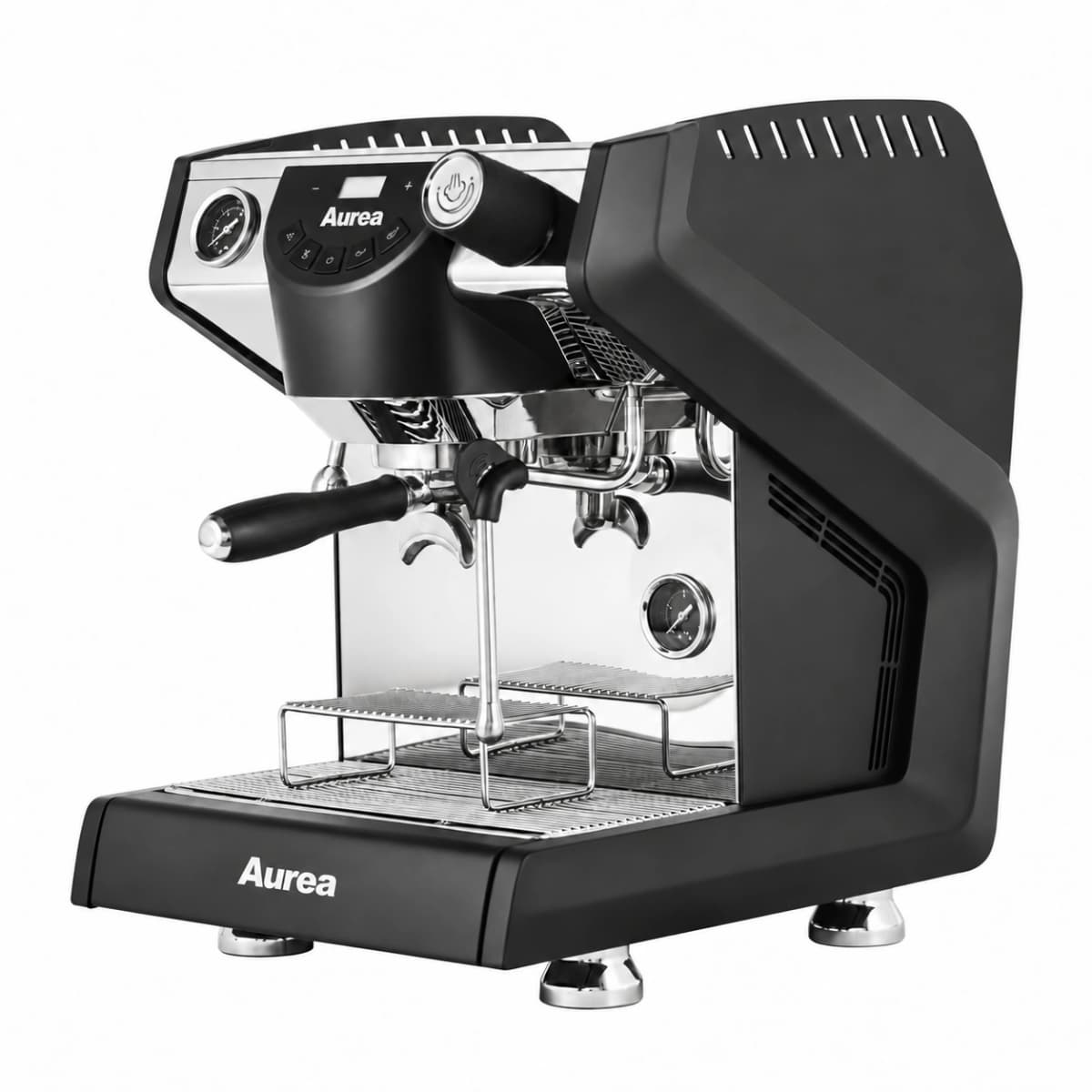
A compact counter
Start with your space and menu. The G3149 combines one group, a 550 ml brew boiler and a 1 L steam boiler.
View full specifications ↗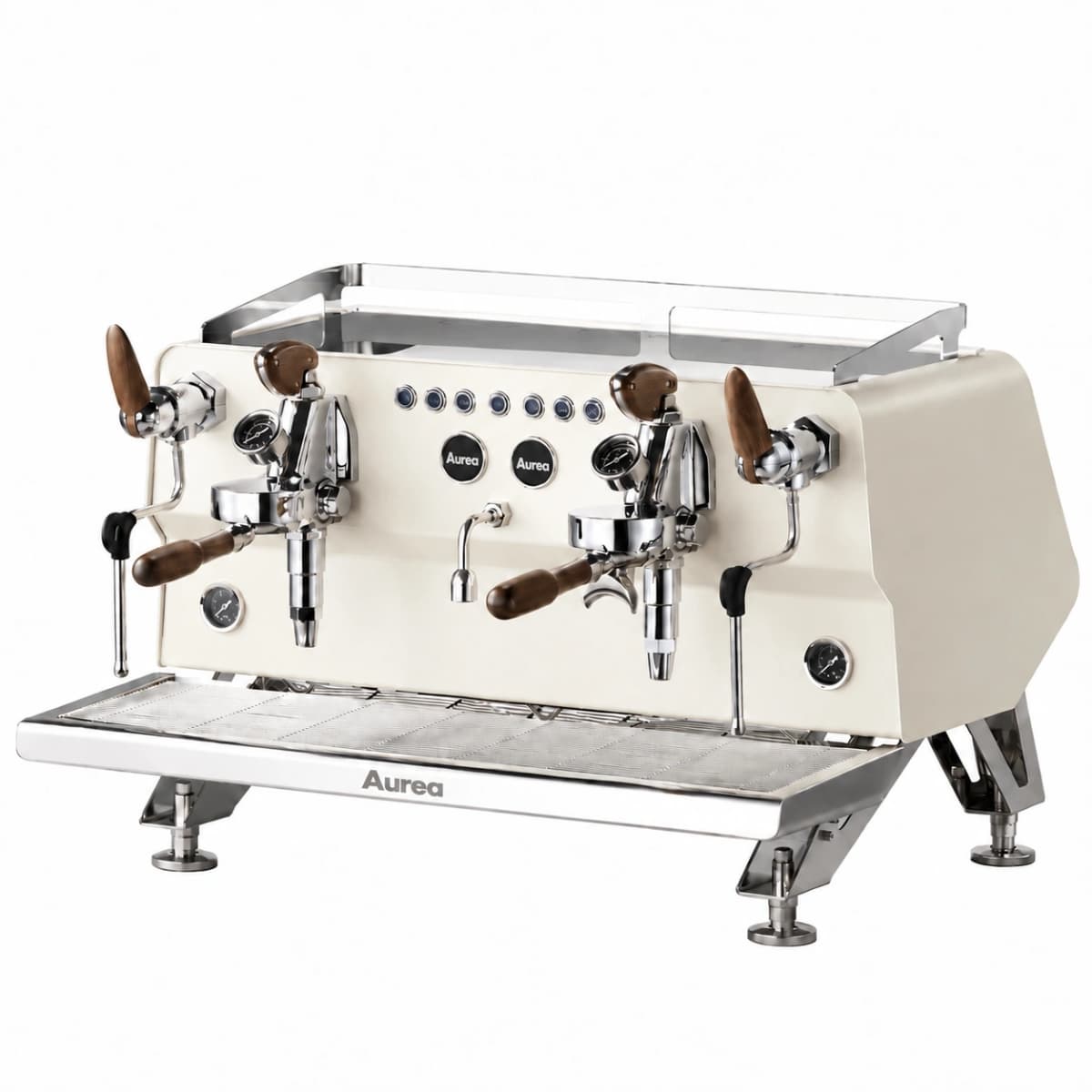
Two-group service
Two brewing stations to organise orders. The G3226C combines two saturated E61 groups and a 10.5 L steam boiler with heat exchanger.
View full specifications ↗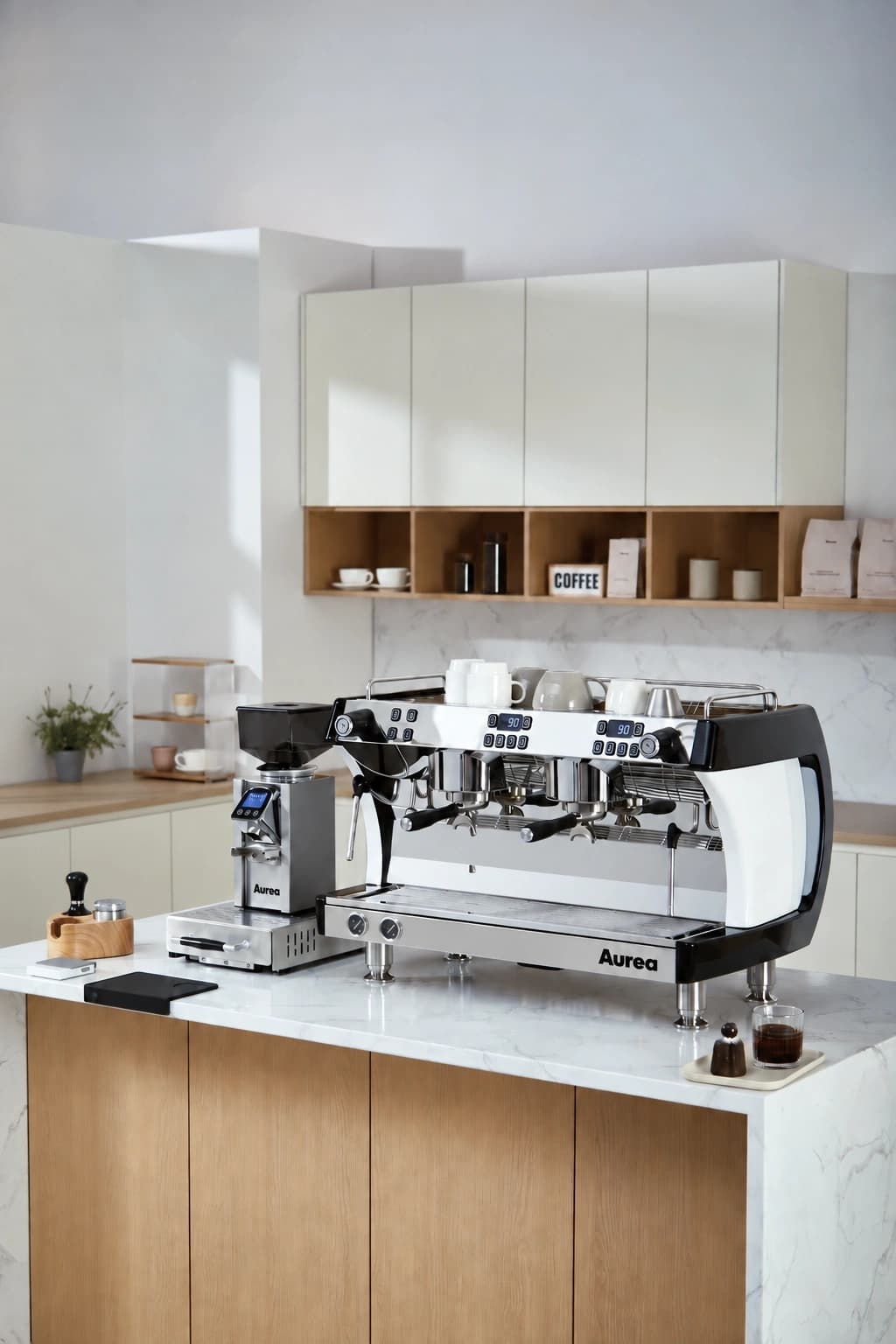
Three groups for your team
A configuration to assess with your team, counter and electrical installation: three 550 ml brew boilers and a 16 L steam boiler with heat exchanger.
View full specifications ↗02 / FROM WATER TO ESPRESSO
Precise choices under the housing.
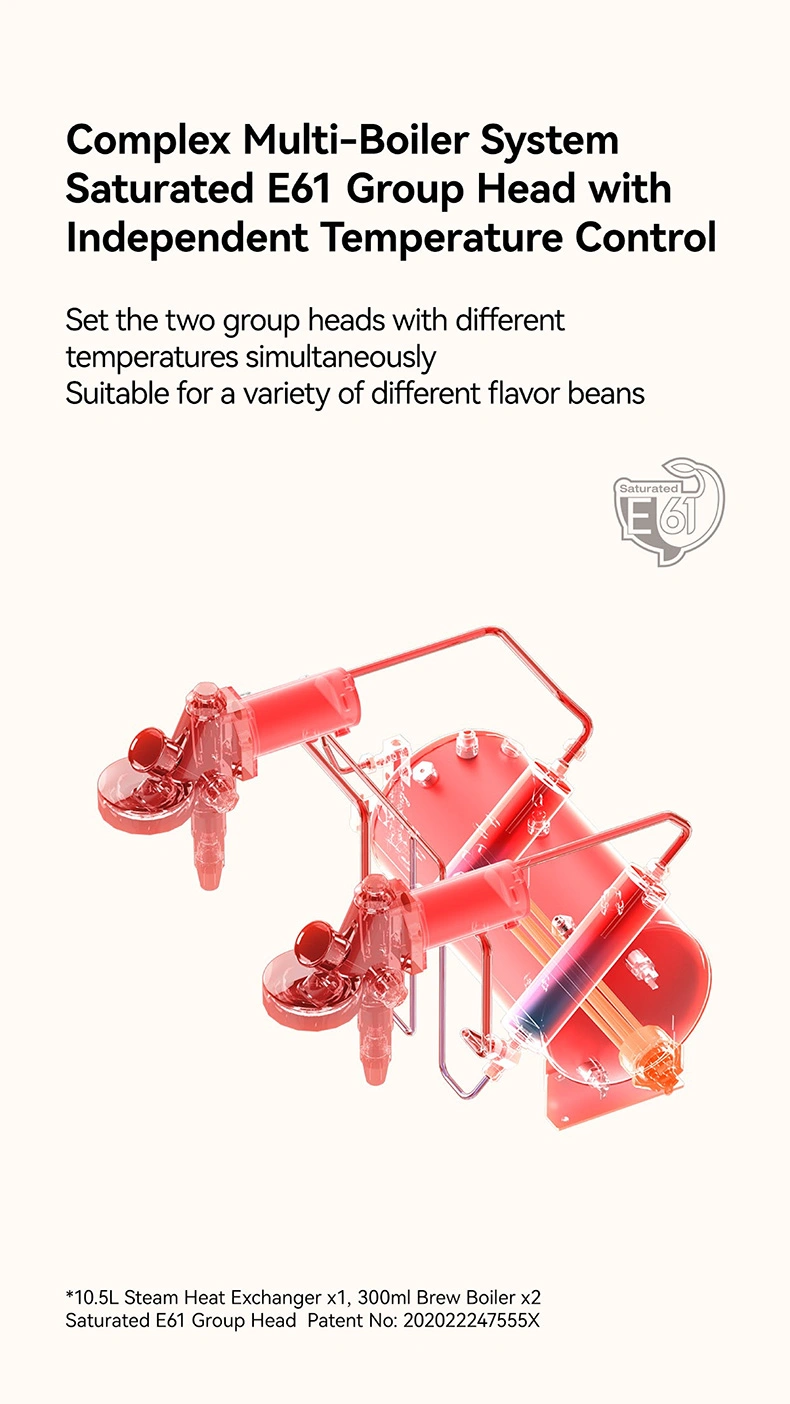
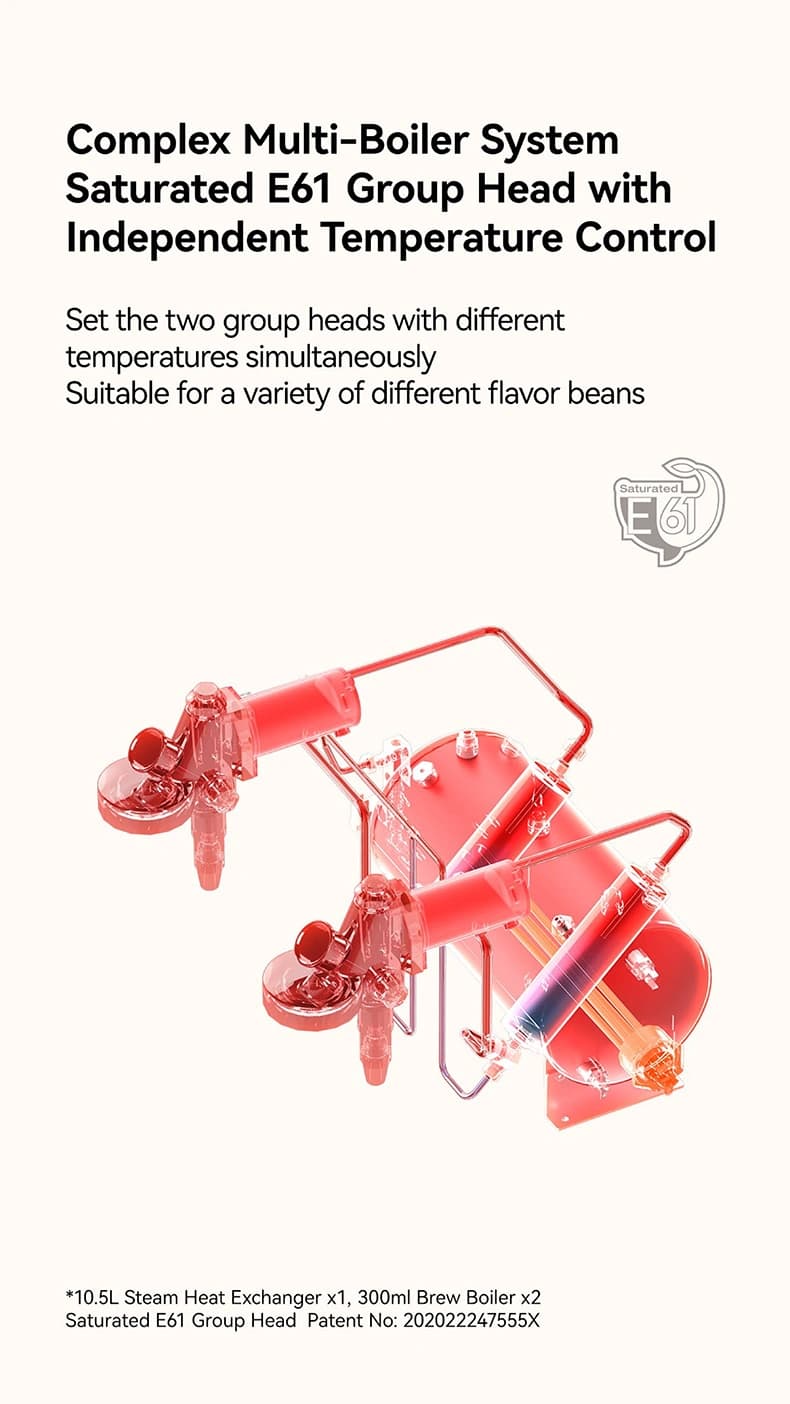
Saturated E61 group
The brew boiler connects directly to the group. On the G3126C and G3226C, each group has a 300 ml brew boiler and PID control.
Manufacturer’s technical illustration · enlarge ↗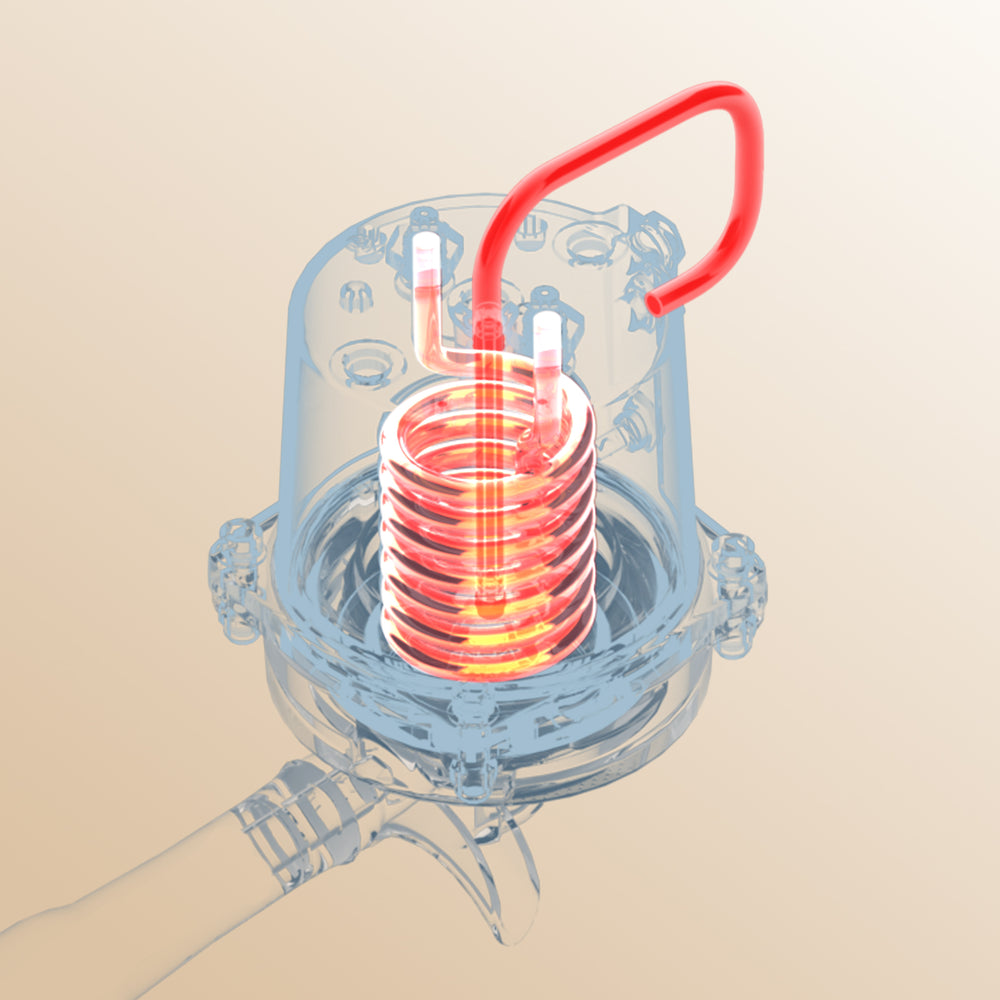
Integrated group
The group and brew boiler sit close together to shorten the water path between heating and extraction. Capacity varies by model.
Manufacturer’s technical illustration · enlarge ↗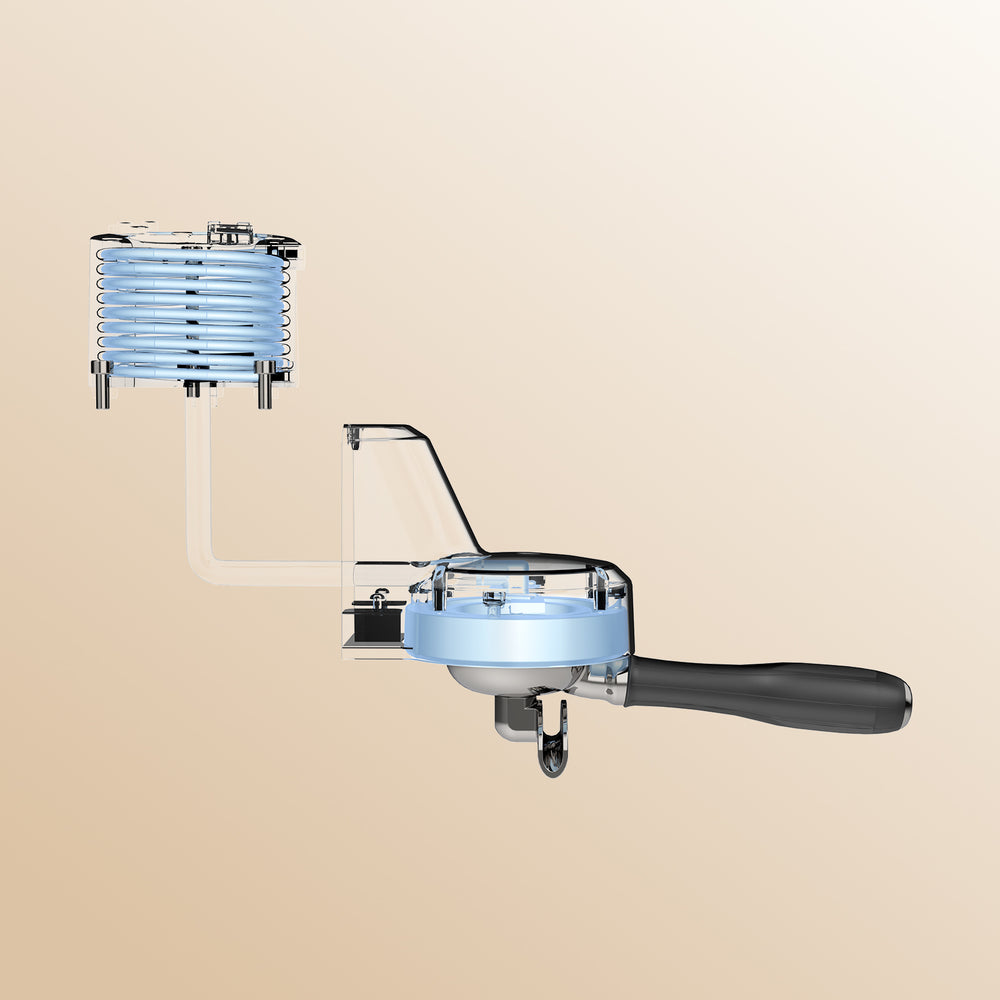
Thermal balance group
A PTC heater supports the group to reduce heat loss along the water path. This architecture is used on the G3006H.
Manufacturer’s technical illustration · enlarge ↗Boiler, heat exchanger, thermoblock.
A boiler keeps a volume of water hot. A heat exchanger carries brew water through a circuit inside a boiler. A thermoblock heats water as it passes through. Hybrid systems combine a boiler and a thermoblock; multi-boiler systems distribute heating across several boilers.
AUREA / THE GROUP IN MOTION
From water to cup, in 24 seconds.
An animated cutaway of the G3126C and G3226C saturated E61 group: heating, pre-infusion and espresso.
- 01
Heating
PID regulates the 300 ml brew boiler connected directly to the group.
- 02
Pre-infusion
Water wets the grounds before the main extraction.
- 03
Extraction
Water passes through the coffee under pressure. Espresso flows into the cup.
- 04
End of the cycle
The supply of extraction water stops. Heating remains regulated.
Educational animation: simplified flow and condensed cycle, not actual warm-up or extraction times. It illustrates the saturated E61 on these two models; other E61 architectures can work differently.
03 / THE OTHER HALF
Give the grinder its place.
An adjusted grind helps control resistance to water flow. Choose the grinder with the machine, then check dose and extraction with your coffee.
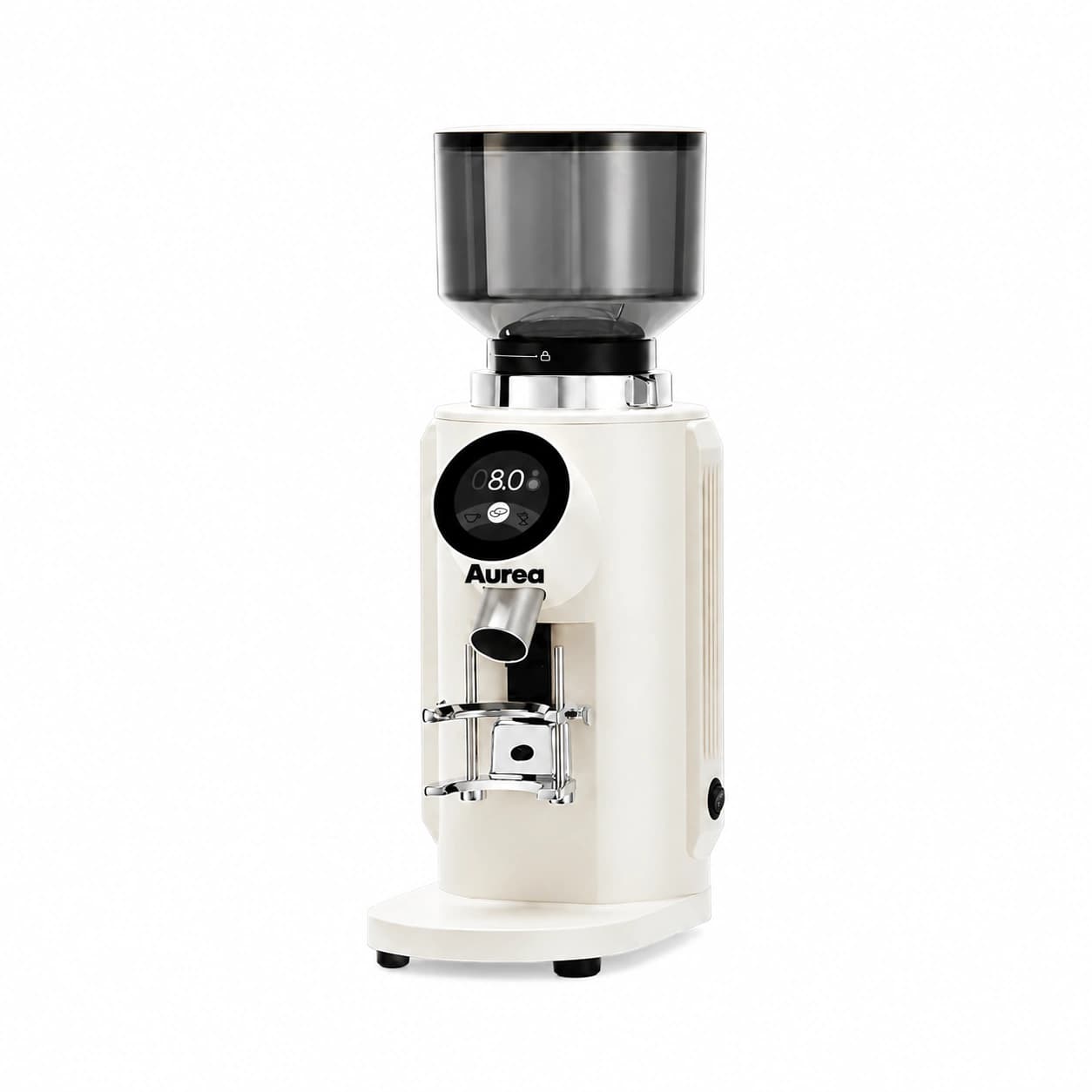
- Burrs · G9018A
- Stainless steel flat burrs · 64 mm
- Hopper
- 450 g
- Dosing
- Touch controls and timed dosing
04 / PREPARE YOUR PROJECT
Four things to share with us.
Your menu
Espresso, milk drinks, decaf, a second origin: describe what you serve and your busiest period.
Your workspace
Measure available width, depth and height. Include the grinder, tamping area, knock box and cleaning access.
Water and electricity
Have your installer check the power supply. Filtration depends on local water quality and the selected machine.
Your quotation
Model, version, quantities, accessories, transport, installation and after-sales services: define each item before ordering.
05 / GOOD QUESTIONS
Answers before you choose.
What changes between one and two groups?
The group is where the portafilter locks in for extraction. Multiple groups help distribute preparations. Actual output also depends on the grinder, steam, recipe and team.
Does a larger boiler make better coffee?
Capacity describes the heating reserve. Cup quality also depends on temperature, beans, grind, dose and extraction. Litres are not a quality score.
What do PID and pre-infusion do?
PID regulates heating. Pre-infusion wets the grounds before the main extraction; settings vary by model. Both help develop your recipe alongside an appropriate grind and dose.
Will every 58 mm accessory fit?
Diameter is a starting point. Portafilter lugs, basket depth and group geometry also matter. Check compatibility with the selected model.
How should I plan maintenance?
Follow your machine’s manual for daily group, portafilter, steam wand and tray care. Water and filtration checks complete the routine. Internal maintenance and descaling must follow the model-specific instructions.
Does buying a machine require a coffee contract?
No. Equipment and coffee, matcha, chocolate or pastries can be purchased separately. Equipment supplied alongside a coffee commitment is a separate contractual programme.